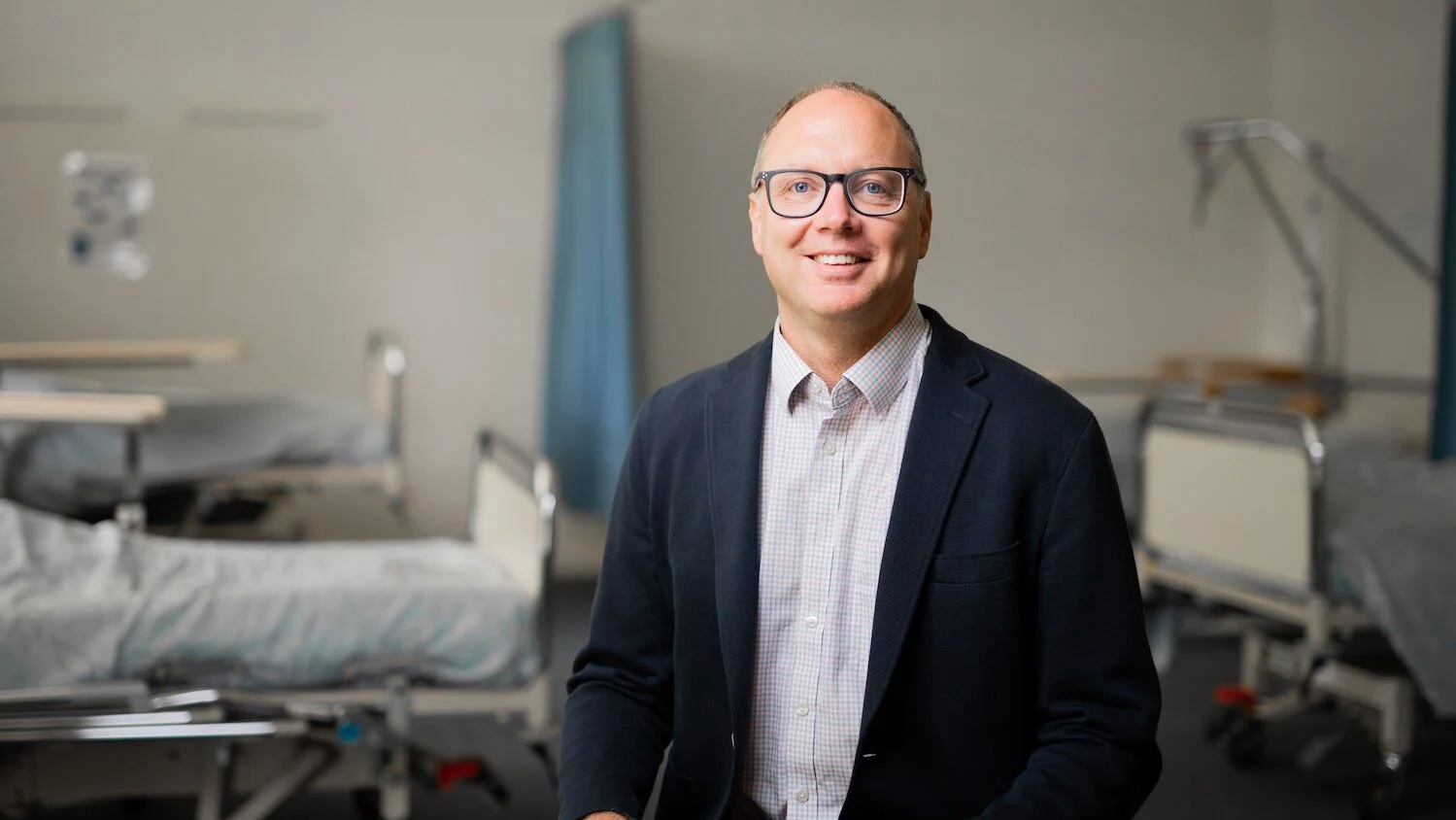
Professor Brett Mitchell.(Credit: Maddy Voinea)
Professor leads landmark pneumonia trial
The simple act of brushing teeth could help save lives, according to a major study led by Avondale University research professor Brett Mitchell.
The research found improved oral hygiene reduced the risk of developing non-ventilator-associated hospital-acquired pneumonia (NV-HAP) by 60 per cent.
The Hospital Acquired Pneumonia Prevention (HAPPEN) trial involved more than 8000 patients across three Australian hospitals. Concluding after 14 months in August 2025, it is the largest multicentre randomised control trial ever conducted on the prevention of NV-HAP.
NV-HAP is one of the most common health-care associated infections, yet it remains under researched. While oral care—including toothbrushing—has been linked to prevention, few high-quality randomised control trials have been undertaken in hospital settings.
The research, published in The Lancet Infectious Diseases on June 9, found that improved oral hygiene care was associated with a reduced risk of NV-HAP, with rates falling from 1.00 to 0.41 per 100 admission days at risk.
Substantial improvements in oral care compliance were observed, rising from 12.6 per cent in the control group to 65.0 per cent in the intervention group. Participants in the intervention group brushed their teeth an average of 1.5 times daily. The intervention involved providing patients with a toothbrush, toothpaste and NV-HAP prevention information on admission to a ward.
“Brushing teeth is a simple intervention that helps reduce bacterial load in the mouth and in turn reduces that bacteria entering the respiratory tract in hospitalised patients,” explained Professor Mitchell.
“It will help shape clinical practice and guidelines globally—preventing thousands of infections and lives lost to this infection.”
Professor Mitchell said the trial was one of many research projects being undertaken by Avondale academics that have tangible benefits for individuals and communities.
“At Avondale, we’re producing a series of high-quality trials in preventing infections. There’s a real need for this research,” he said.
Avondale University is a tertiary institution operated by the Seventh-day Adventist Church in Cooranbong, New South Wales.—Bailee McLeod
